The real cost of Retrofitting old windows for better thermal insulation: Films vs. replacement: hidden expenses revealed
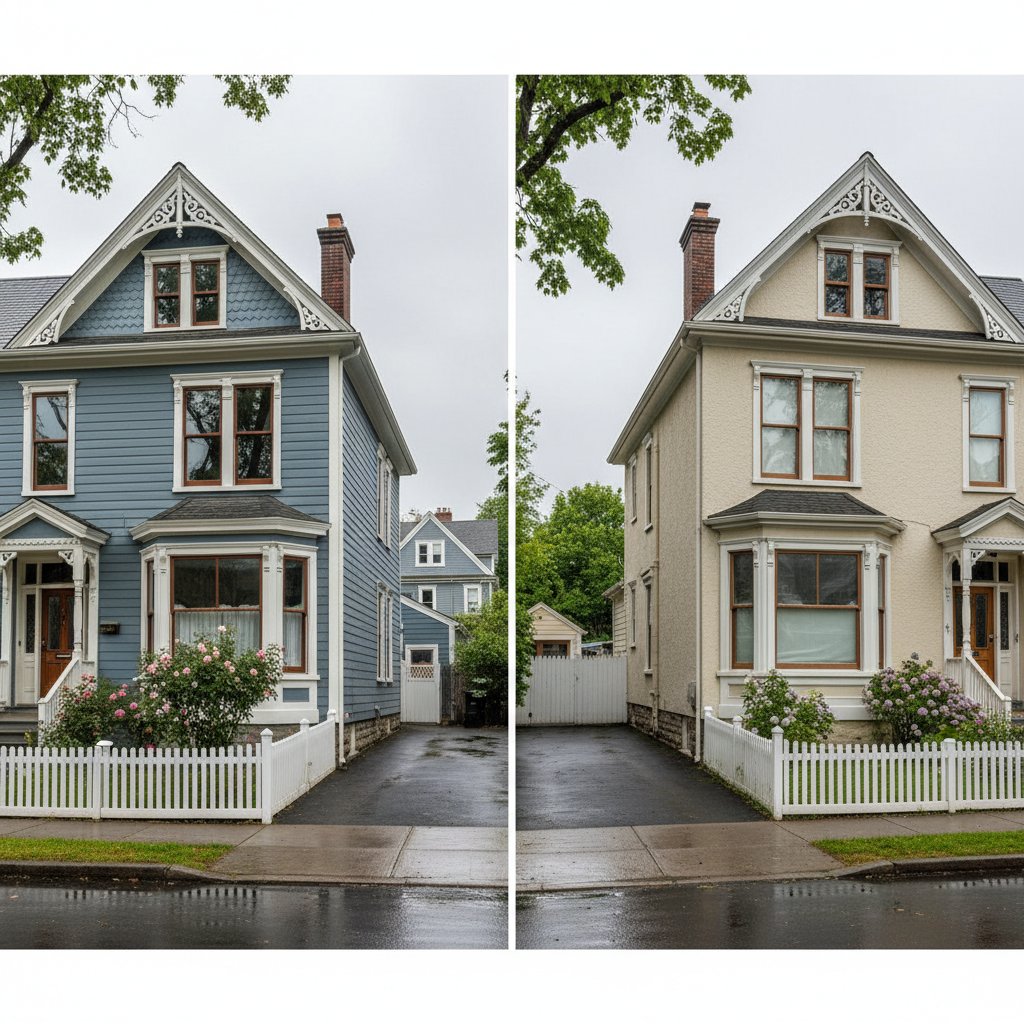
My neighbor Jerry spent $847 on window film last spring, convinced he'd found the silver bullet for his drafty Victorian. Six months later, he's ripping it all off and writing a check for $18,000 to replace every window in his house. What happened?
The real story of upgrading old windows isn't just about upfront costs. It's about what nobody tells you until you're already knee-deep in the project, watching your budget evaporate like morning frost on single-pane glass.
The Seductive Math of Window Films
Window insulation films look incredible on paper. You're staring at $3-7 per square foot for DIY installation, maybe $8-12 if you hire someone. Compare that to $300-1,000 per window for full replacement, and the choice seems obvious.
Here's what the brochures don't mention: that film only addresses one part of your heat loss problem. According to the Department of Energy, air leakage around window frames accounts for 25-40% of heating and cooling energy loss. Your shiny new film? It does exactly nothing about that.
Jerry learned this the hard way. His heating bills dropped by maybe 8% that first winter. He'd been promised savings of 30-50%.
The Hidden Costs Nobody Warns You About
Surface Preparation (The Budget Killer)
Professional film installers will tell you—off the record—that 40% of older windows can't accept film without serious prep work. We're talking about:
- Sanding and refinishing damaged sills: $150-300 per window
- Repairing deteriorated glazing: $75-200 per window
- Cleaning mineral deposits from glass: $50-100 per window
That $847 Jerry budgeted? It became $2,100 before the first film went up.
The Lifespan Reality Check
Quality window film lasts 10-15 years under ideal conditions. Old windows rarely provide ideal conditions. Moisture between the film and glass causes bubbling. Temperature fluctuations create peeling. South-facing windows can fail in as little as 5-7 years.
Replacement windows? You're looking at 20-30 years minimum, often with transferable warranties that actually mean something for resale value.
When Replacement Becomes Unavoidable
Sarah Chen, a building envelope consultant in Minneapolis, puts it bluntly: "If your windows were installed before 1980 and you're seeing condensation between panes, visible rot, or difficulty opening and closing, film is just postponing the inevitable. You're spending money twice."
The real kicker? Many homeowners don't realize their windows have failed until after they've installed film. The improved interior comfort masks the underlying structural issues—temporarily. Then the rot spreads to the framing, and suddenly you're not just replacing windows. You're rebuilding wall sections.
A contractor friend told me about a client who delayed window replacement for three years using films. The final bill included $12,000 in unexpected framing repairs. The original window quote had been $15,000.
The Sweet Spot: Strategic Hybrid Approaches
Not every window needs immediate replacement. A 1920s home might have original wavy glass worth preserving in a formal dining room that's barely used. That's where film makes sense.
Smart retrofitters are mixing solutions: replacing the worst offenders (north-facing windows, bedroom windows, kitchen windows that take daily abuse) while filming the occasional special cases. This drops the total project cost from $25,000 to maybe $16,000, while still capturing 85-90% of the energy savings.
The Tax Credit Wildcard
Here's something that changes the math completely: the Energy Efficient Home Improvement Credit offers up to $600 annually for qualified window replacements. Films? They don't qualify.
Factor in utility rebates (my local gas company kicks in $75 per Energy Star window), and suddenly that price gap shrinks dramatically. The effective cost difference between comprehensive filming and selective replacement might be only $4,000-6,000, not the $15,000 it appears on the surface.
Key Takeaways
- Films work best on structurally sound windows less than 30 years old with minimal air leakage
- Total film costs including prep work often reach 40-60% of replacement costs, not the 10-20% advertised
- Replacement delivers 3-4x longer lifespan and addresses air leakage, frame deterioration, and resale value
- Hybrid approaches replacing critical windows while filming others can capture most benefits at 60-70% of full replacement cost
- Tax credits and rebates only apply to replacement, potentially offsetting 15-25% of project costs
Jerry finally figured it out. He's keeping his original stained glass window in the stairwell—protected with high-quality film. Everything else is getting replaced with triple-pane units. His final cost? $19,500 after rebates. If he'd done this from the start instead of the film experiment, he'd be at $17,800.
Sometimes the expensive option is actually cheaper. You just have to look past the first invoice.